The sea in late October is a different creature from the one you swam in during August. It goes slate and pewter, the horizon softens into the cloud, and the beach belongs to dog walkers and the occasional determined swimmer. That shift is worth copying indoors. A coastal scheme that stays in bleached blue and white all year starts to feel thin once the clocks change — a bit like wearing a linen shirt in November. Autumn gives you permission to deepen everything: heavier blues, greens with grey in them, wool underfoot, and the particular greenish glow of sea glass on a windowsill.
Start with the water: deep blues and greyed greens
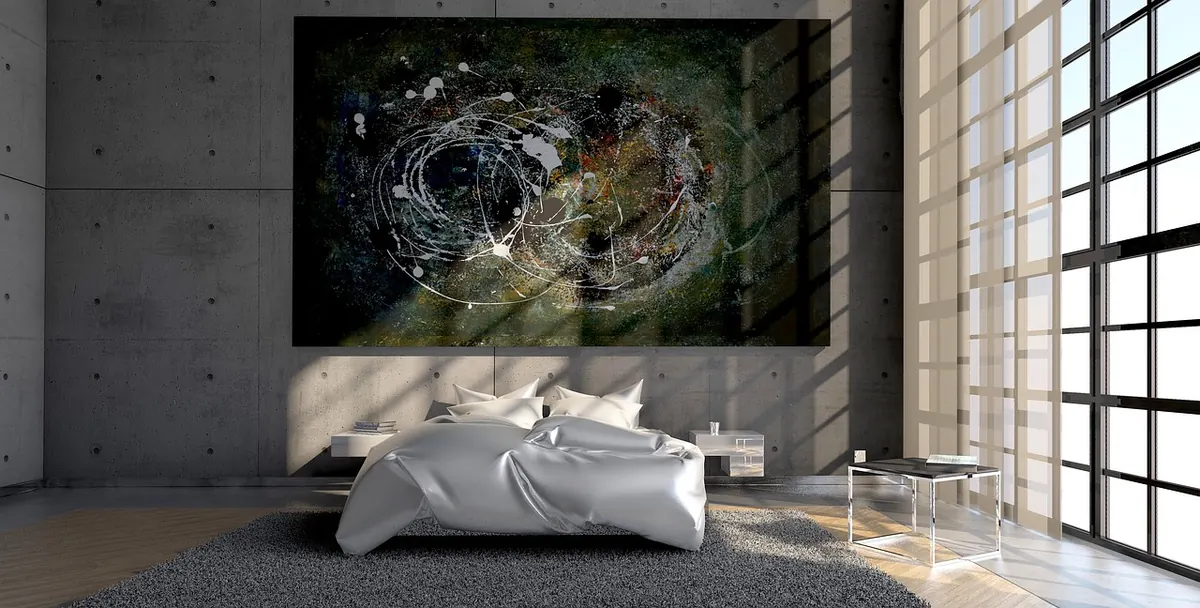
Most coastal rooms begin with pale walls, and there is nothing wrong with that. But one darker surface — a chimney breast, the wall behind a bed, a run of kitchen cabinetry, even the inside of a bookcase — gives everything else something to sit against.
Look at the undertone when you choose that darker colour. Blues with grey or green in them read as sea and sky; blues with a purple or red undertone read as smart and slightly urban, which is a different room entirely. Think ink, slate and harbour-at-dusk rather than royal or cobalt. Greyed greens are the quiet partner to those blues: sage with the yellow knocked out of it, eucalyptus, drab olive, the colour of bladderwrack on a rock.
Paint a large board — A2 or bigger — and move it around the room for a week before you commit. Dark colours shift with the light far more than pale ones do, and a shade that looks magnificent at noon can go flat by four o'clock in November.
Add weight underfoot and in the hand
Summer coastal rooms are full of cotton, rattan and bare boards. In autumn the same room needs weight, and wool supplies it without making the space feel heavy. A chunky throw folded over the arm of a chair, a wool runner down a hallway, knitted cushions in place of the summer linen ones — often that is all it takes.
Stay in the scheme with your colours: oatmeal, charcoal, heathered grey-blue, a deep green that echoes the walls. A herringbone or houndstooth weave adds pattern without the busyness of a print. If you have dogs or small children, a mid-tone wool will forgive more than cream, and look for throws that can be hand-washed cool and dried flat.
Layering a small wool rug over jute or sisal is a cheap way to warm a room, and it lets you change the whole feel for the colder months without moving furniture. Keep the edges flat with a non-slip underlay so nobody trips on the way to the kitchen.
Sea glass: the accent that does the work
Sea glass is the thread that ties everything back to the coast. Frosted green, milky white, soft aqua, the occasional amber — the colours are muted enough to sit happily with deep blues and greyed greens, and a little goes a long way.
Ways to use it
- A wide glass bowl on a windowsill, half-filled with a single colour.
- Three or four pieces on a hall shelf, propped against the wall.
- A lamp with a base filled with glass, or a frosted sea-green shade.
- A shallow tray or a set of coasters, bought from a craft market rather than the high street.
- A jar of collected pieces in the bathroom, where light through frosted glass works hardest.
If you gather your own, take a handful and leave the rest. Some protected beaches and nature reserves ask visitors to leave everything where it lies, so check the signs before you fill your pockets. If you are buying instead, a local studio or craft maker will usually have better colour than the bagged glass sold as vase filler.
Resist the urge to spread it across every surface. Sea glass reads best as one deliberate moment per room — a bowl, a lamp, a small cluster — rather than confetti.
Light for the long evenings
The scheme only works if you can see it. As the afternoons shorten, a single overhead light becomes harsh and unflattering against dark walls. Build from lamps instead: one on a side table, a floor lamp behind a reading chair, a small lamp on the kitchen worktop. Warm white bulbs, around the 2700K mark, suit deep blues and greens far better than cool white.
Mirrors earn their keep now. Placed opposite a window, an old mirror or a plain frameless one will pull whatever daylight there is across the room. Candles add to the mood, but keep them clear of throws, curtains and anything else that drapes, and never leave them burning in an empty room.
Five changes for a wet Saturday
- Pack away the white cotton cushion covers and bring out wool or heavy linen in charcoal, oatmeal or deep green.
- Swap a pale lampshade for linen or woven paper in a warm neutral, so light comes down rather than out.
- Move a mirror to face the main window, and clear the sill in front of it.
- Fill one glass vessel with sea glass and put it where the evening lamp will catch it.
- Paint one small surface dark — a door, a panel behind a shelf, the inside of an alcove — rather than committing to a whole room.
Where to stop, and when to lighten it again
The risk with any seasonal scheme is overdoing it. Pick two or three moves and let the bones of the room stay coastal: pale walls, natural floor, a few good pieces of furniture. Deep blues and greyed greens will carry you comfortably from October through to March.
Come spring, wash the wool throws, put the sea glass back on the sill with the curtains open, and reintroduce the lighter cottons. Store everything together in one labelled box so the swap takes an afternoon rather than a weekend — and next autumn your palette will be waiting.
Photo: Pexels / Pixabay